
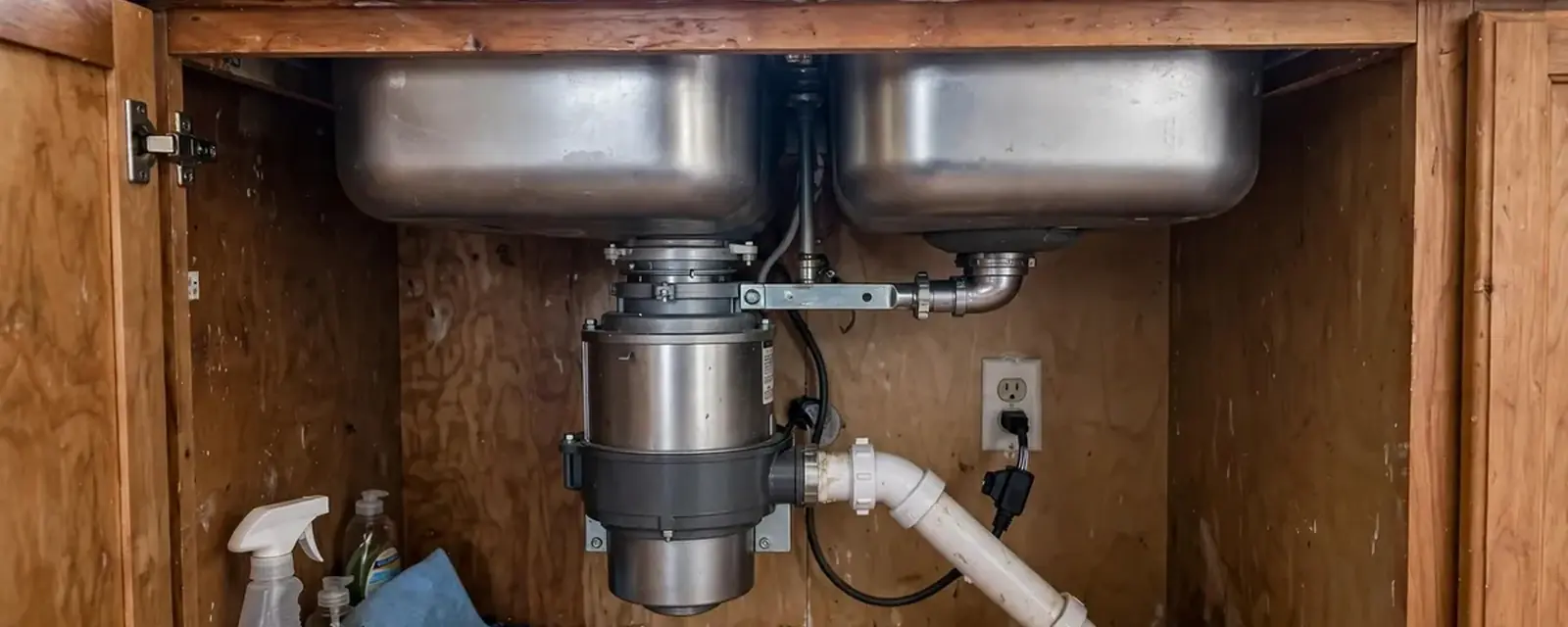
Installing a garbage disposal is one of the more approachable plumbing projects. The unit hangs from the sink flange, connects to the trap and plugs into an outlet.
Before you buy one, there is a question that matters more than the tools. Is your home on a septic system, and can that system take the added solids?
Answer the septic question first
The township groundwater study found that about 72 percent of local soils have severe limitations for conventional septic systems, and the Kinnelon Board of Health tells residents not to add a garbage grinder to an existing system.
A disposal adds food solids to a tank, which fills the tank faster and sends more fat and fine solids toward the field. If your home is on septic, talk to a septic professional first, and consider composting instead.
Tools and parts
You will need a disposal unit, a mounting kit, plumber's putty, a dishwasher knockout tool if you have a dishwasher, a drain connection kit, a power cord kit if the unit has none, a hex key, a screwdriver and a bucket.
Confirm that the sink has a 3.5 inch opening and that the cabinet has room for the unit under the flange.
The basic steps
A general outline, always following the manufacturer's instructions.
| Step | What you do | Watch for |
|---|---|---|
| Power and water off | Switch off the circuit, close the stops | Confirm with a tester |
| Install the flange | Putty under the flange, secure the mount | Even tightening |
| Hang the unit | Lock it to the mounting ring | Align the discharge |
| Connect the drain and dishwasher | Attach the trap, open the knockout | Do not drop the plug into the unit |
| Wire and test | Connect power, run water and test | Check every joint for drips |
Electrical details
Most disposals plug into an outlet under the sink, usually switched at the wall. If there is no outlet, one must be installed by a licensed electrician. Never splice wires inside a plumbing cabinet without proper boxes and connectors.
Check the amp rating on the unit's label against the circuit, and use a ground fault interrupter outlet where code calls for one.
When to leave it to a plumber
If the existing drain is corroded, the cabinet is cramped, the sink flange is unusual or the dishwasher connection is not standard, a plumber will finish the job faster and avoid a leak. A leak inside a cabinet can rot wood long before it is noticed.
A plumber can also install or repair it under garbage disposal repair when something goes wrong later.
Using a disposal well
Run cold water before, during and after grinding. Feed scraps slowly and avoid fibrous items like celery and corn husks. Keep grease, coffee grounds in volume and pasta out of it.
Never put your hand in the unit, and use tongs to retrieve a dropped item after switching off the power.
Signs your installation needs attention
A drip that returns after tightening, a hum with no spin or a smell that lingers after cleaning are signs of a trouble spot. A plumber can check the seals and the trap.
Catching a small leak early protects the cabinet floor from rot.
Before you buy the unit
Check the unit's horsepower, the noise rating and the warranty. Measure under the sink for clearance. Look at your drain pipe material and the trap arrangement.
A larger unit grinds more finely, but it also draws more power and takes more space.
Common installation mistakes
Forgetting to knock out the dishwasher plug leaves the dishwasher unable to drain. Over-tightening the mounting ring cracks the sink. Skipping putty under the flange leads to a leak.
Test with the water running for several minutes and check every joint with a dry tissue.
Alternatives to a disposal
A countertop compost bin, a kitchen scrap collection service or a backyard compost pile handle food waste without adding solids to a septic tank. They also keep food scraps out of your sink drain.
For many households this is the simpler answer and leaves the plumbing alone.
Local notes for West Milford
Local rules and conditions.
Septic is common
The township Health Department at 1480 Union Valley Rd handles septic matters, so ask it before adding load to a system.
Kinnelon guidance
The Kinnelon Board of Health recommends pumping a tank every three years, every two as it ages, and says not to add a grinder.
Permit rules
Permit rules vary, so ask the West Milford building department whether your project needs one.
Licensing
New Jersey requires that plumbing work be done by licensed professionals, so check the rule before you start.
Questions like this come up for homes in Kinnelon and Ringwood, so confirm local rules in your own borough.
Garbage disposal installation questions
Can I install a disposal on a septic system?
It can be done, but it adds solids. Ask a septic professional first.
Does a disposal need its own circuit?
Often a dedicated circuit is recommended. Check the label and local code.
How long does a DIY install take?
A few hours for someone with basic tools and a standard sink.
What if it leaks after I install it?
Shut off the water, find the joint and tighten or reseal it. Call a plumber if you cannot.
Is composting an alternative?
Yes, and it avoids adding solids to a septic system.
Which codes apply to a disposal?
The drain follows the National Standard Plumbing Code under N.J.A.C. 5:23-3.15 and the wiring follows the National Electrical Code (NEC), so check both before you start.