
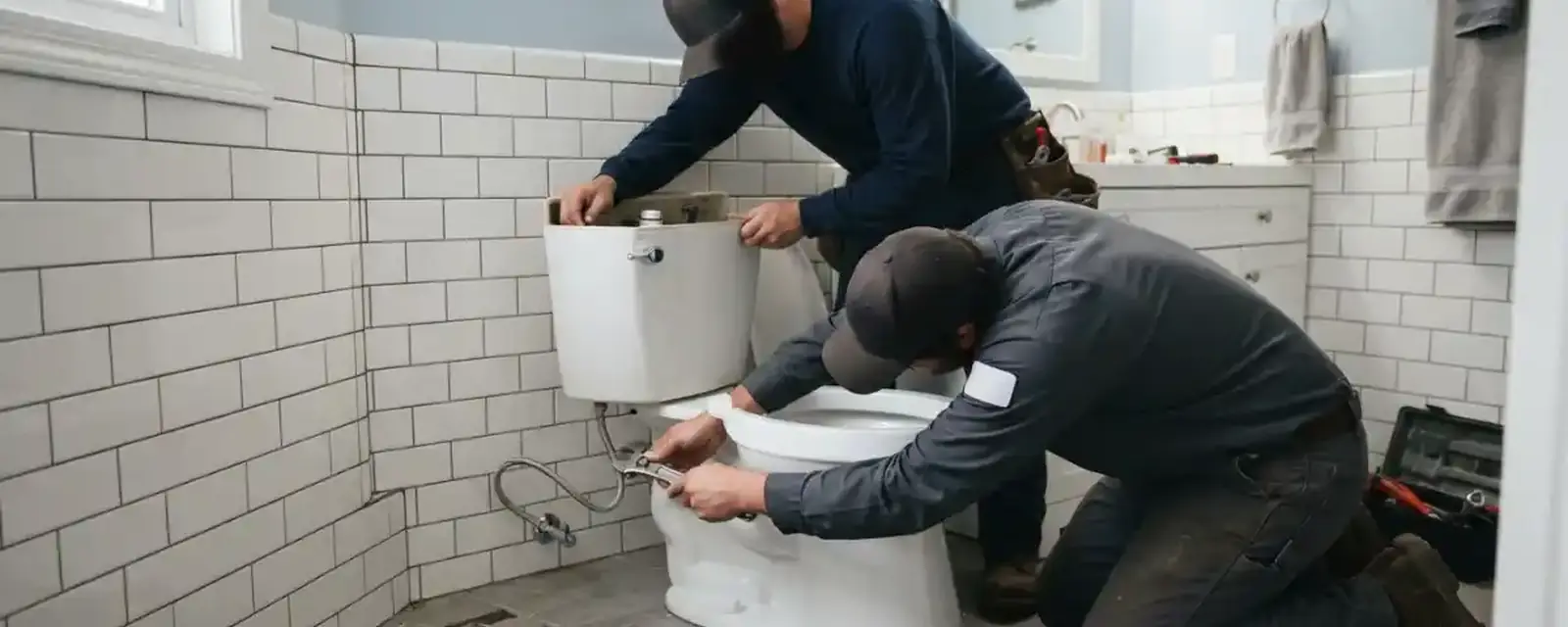
The fill valve is the part that refills the tank after each flush and shuts off at the right water level. When it wears out, the toilet may hiss, trickle or run until the overflow tube swallows the extra water.
Many homeowners replace one with a universal kit in about half an hour. This guide covers the signs, the steps and the cases where a plumber should do it instead.
Signs the fill valve has failed
A hissing sound after the tank is full is the classic sign. Others include a tank that refills slowly, a water level that creeps above the overflow tube and a toilet that runs briefly every few minutes, called a phantom flush.
Check the flapper first. Put a few drops of food coloring in the tank and wait, and if color appears in the bowl without flushing, the flapper leaks, not the fill valve.
What replacement involves
Turn off the supply valve behind the toilet and flush to empty the tank. Disconnect the supply line, loosen the locknut under the tank and lift out the old valve. Set the new valve at the manufacturer's recommended height, tighten the nut by hand plus a quarter turn and reconnect the supply.
Refill, set the water level to the mark on the tank or an inch below the overflow tube and test several flushes. Check every connection for drips with a dry paper towel.
Quick diagnosis
Match the symptom to the part.
| Symptom | Likely part | Action |
|---|---|---|
| Hissing with a full tank | Fill valve | Replace the valve |
| Color from tank appears in bowl | Flapper | Replace the flapper |
| Water at the supply connection | Supply line or washer | Replace the line or washer |
| Water at the floor | Wax ring or bolts | See toilet repair |
Choosing the right replacement valve
Fill valves come in tower, float-cup and side-mount styles. Measure from the top of the tank's overflow tube to the bottom of the tank, and compare that height to the valve's adjustment range. Check whether the supply enters from the bottom or the side.
Buy a valve meant for your tank. A tower valve that is too tall will hit the lid, and one that is too short will not reach the right water level.
Other causes of a running toilet
A flapper that is warped or covered in scale lets water leak into the bowl. A chain that is too short holds the flapper open, and one that is too long can get caught under it. A cracked overflow tube lets water drain away.
Fix the cheapest and most likely cause first, and test after each change. Replacing everything at once leaves you unsure what the problem was.
Water-saving tests
A toilet that leaks silently can waste a large amount of water over a month. The dye test above takes ten minutes. Do it before you leave on a trip and after any repair.
If your home is on a well, an unnoticed leak also makes the pump run more, and that shortens pump life.
Tools and parts to have on hand
You need an adjustable wrench or pliers, a small bucket, a sponge, a towel and the replacement kit. Replace the supply line at the same time if it is old, because braided lines age and can fail after the repair.
Check the shutoff valve before you start. If it will not close all the way, stop and call a plumber instead of forcing it.
After the swap, test like a plumber
Flush at least five times and watch the refill. The water should stop about an inch below the top of the overflow tube. Listen for hissing after the tank is full and check the supply connection with dry tissue.
Check again the next morning, since a slow drip can take hours to show.
A ten-minute checklist before you start
Clear the floor around the toilet and lay a towel down. Take a photo of the existing valve and the supply connection so you can match the new parts. Make sure the shutoff valve turns freely before you commit to the job.
Have a bucket ready for the water left in the tank and a flashlight for the dark space behind the bowl.
Fill valve styles and which one suits you
The tower style is the most common and is easy to adjust with a screw or a clip. A float-cup style rides up the shaft and is quieter. A side-mount float is common in older toilets and needs more room.
For a standard tank, a tower style that matches your tank height is the simplest choice.
Local notes for West Milford
Water quality affects how long these parts last.
Hard municipal water nearby
The Borough of Ringwood lists hardness up to 191 parts per million in its 2024 water quality report, and hard water leaves scale on valve seals.
Private wells are common here
The township groundwater study recorded 2,449 domestic wells, and well water can carry sediment that lodges under the seal of a fill valve.
Check the supply valve too
Old stop valves that will not close completely are a common snag. Replacing the valve is a plumber job.
Septic homes
On septic, a toilet that runs constantly sends extra water to the tank and field.
Our team handles toilet calls in Ringwood and Bloomingdale, and the guidance applies in both.
When to call a plumber
Call if the supply valve will not shut off, the tank is cracked, there is water at the base or the toilet is still running after a new valve. If water is already on the floor, treat it as an emergency and see emergency toilet repair.
Fill valve questions
Does a universal fill valve fit every toilet?
Most standard two-piece toilets accept one. Check the tank height and the water inlet type.
How tight should the locknut be?
Hand tight plus a quarter turn. Over-tightening cracks the porcelain.
Can I flush with the water off?
Pouring a bucket of water into the bowl flushes in an emergency.
What does hard water do to the valve?
Scale builds on the seal, which can stop it from closing fully.
Should I replace the supply line too?
If it is old, brittle or discolored, yes. It costs little and removes a failure point.
Why does my toilet fill slowly?
A partly closed stop valve, a clogged filter screen in the valve or sediment can slow it down.
Does a toilet repair need a permit?
A like-for-like part swap usually does not. Anything that changes piping follows the National Standard Plumbing Code that New Jersey adopts in N.J.A.C. 5:23-3.15.