
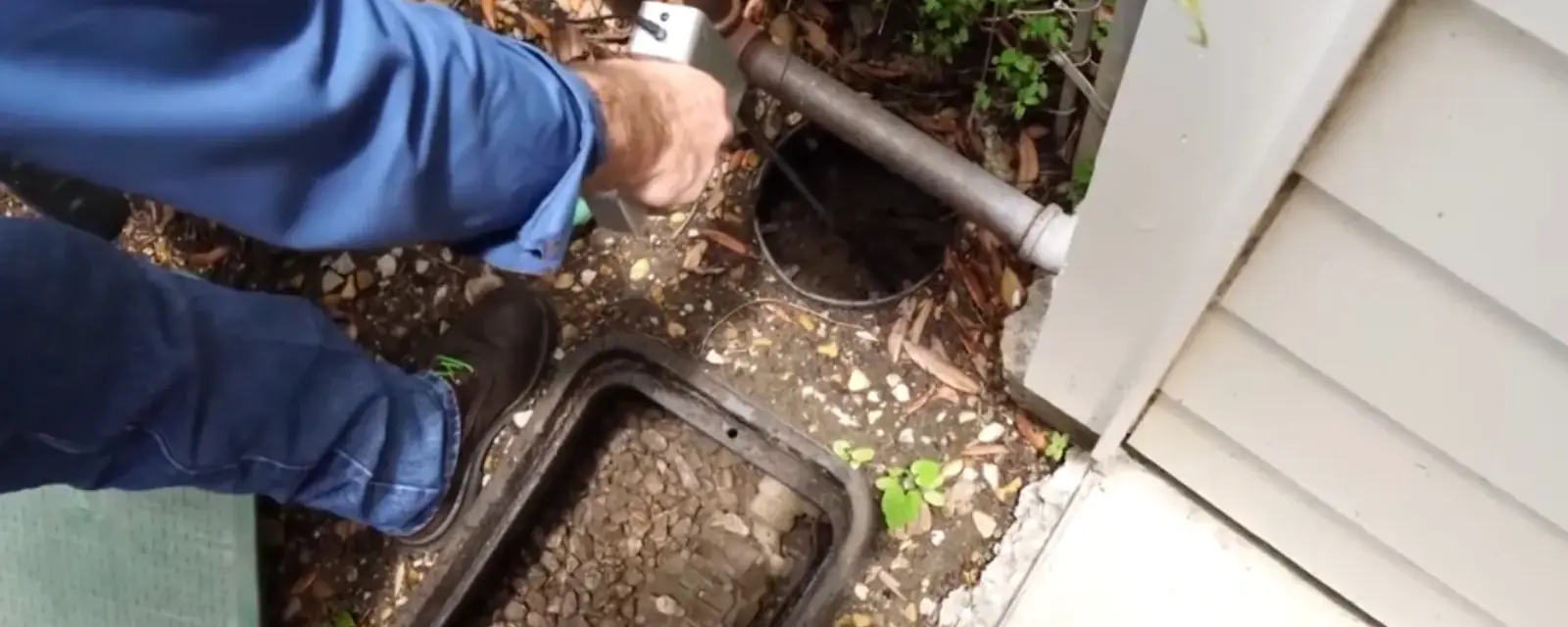
If water is visibly spraying or soaking a ceiling, shut off the main water valve and call the 24/7 line. A hidden leak that has not shown itself yet can wait for a daytime visit, but every hour a burst line runs adds to the repair.
Leaks in West Milford homes often turn up as symptoms rather than puddles. A well pump that cycles when nobody is using water, a water bill that creeps up or a patch of lawn that stays soggy in dry weather are all reasons to have the system tested.
The plumber's goal is to find the leak without tearing out finished walls, so the first step is isolating which part of the system is losing water before any opening is cut.
How hidden leaks are found
The plumber starts by isolating the system. With every fixture off, a pressure test shows whether the supply side holds, and a closed-valve check narrows the leak to a zone such as the slab, a wall branch, the heater loop or the line from the street or well.
From there, acoustic listening picks up the hiss of escaping water through pipe and soil, and an infrared camera reads temperature differences behind drywall that point to hot or cold lines leaking. All of this happens before anyone cuts into a wall.
Signs worth a call
Some leaks announce themselves. Most do not.
Well pump that cycles with no water in use
On a private well, the pump kicking on and off with every fixture closed often means water is escaping somewhere.
Higher bills or a moving meter
If you are on public water and the meter turns with everything off, water is leaving the system.
Musty smell or stained drywall
Staining that grows or returns after drying points to a slow wet source.
Wet spots in the yard
A soggy strip between the street or well and the house can be a service line problem.
Hidden leak suspected?
Call the 24/7 line. We can talk through a quick shutoff test you can do while we schedule a visit.
Wells, meters and why the clue differs
The township's groundwater study recorded 2,449 domestic wells, so many West Milford houses have no water meter at all. On those homes, the clue is a pump that runs more than it should and a pressure tank that will not hold pressure, rather than a spinning dial.
On public water, the meter does the same job, and a plumber can watch it with every fixture off. If the leak is in the buried line from the street or well, water service line repair is the likely next step.
Which method fits which situation
Different leaks call for different tools.
| Situation | Method | What it shows |
|---|---|---|
| Leak somewhere in the supply system | Pressure test and zone isolation | Whether and roughly where the system loses pressure |
| Behind drywall or under flooring | Infrared and moisture mapping | Temperature and moisture patterns |
| Buried or slab piping | Acoustic listening | The sound of escaping water through the surface |
| Drain or sewer suspected | Camera inspection | Cracks, offsets and standing water |
What affects the price of leak detection
Leak detection is priced by the search, and a few things change how long it takes.
Size and layout of the home
A basement-and-crawl-space ranch is quicker to survey than a multi-level home.
Where the leak could be
A suspected buried line takes different equipment than a wall leak.
Methods needed
Pressure testing, listening and infrared each add time.
Access to the pipes
Open basements help. Finished ceilings and walls take care.
Time of the call
After-hours detection is priced differently than a scheduled visit.
Some insurance policies pay for the cost of finding a covered leak, so ask yours before the visit. You get a clear price before work starts, and the real number takes one call.
What to do while you wait
Shut off the main water valve if you can reach it, photograph any damage for your records and keep fans and a dehumidifier running in damp rooms. Do not cut into drywall yourself, because an opening in the wrong place can complicate the search.
Leak detection questions
Do you handle leak detection emergencies at night or on weekends in West Milford?
Yes. An active leak is handled as an emergency on our 24/7 line, including nights, weekends and holidays. Shut off the main water valve first, then call.
Do I have to open a wall to find a leak?
Usually not. Pressure testing, listening and infrared scanning narrow the location so that any opening is small and targeted.
Can you find a leak under a basement slab?
Often yes. Acoustic equipment and pressure tests locate the area before any cutting is planned.
How do I check for a leak on a private well?
Turn off every fixture and watch whether the pump cycles. A pump that kicks on while nothing is running is worth a call.
Will the plumber also repair the leak?
Yes. Once the leak is located, the plumber can give a clear price for the repair before work starts.
What if the leak is in the drain, not the supply?
A camera inspection checks the drain and sewer lines for cracks or standing water, which is a different search than a pressure leak.
Do leak repairs need a permit?
Finding a leak does not, but replacing sections of pipe may. Repairs follow the National Standard Plumbing Code as adopted in N.J.A.C. 5:23-3.15, so ask the West Milford building department about your job.