
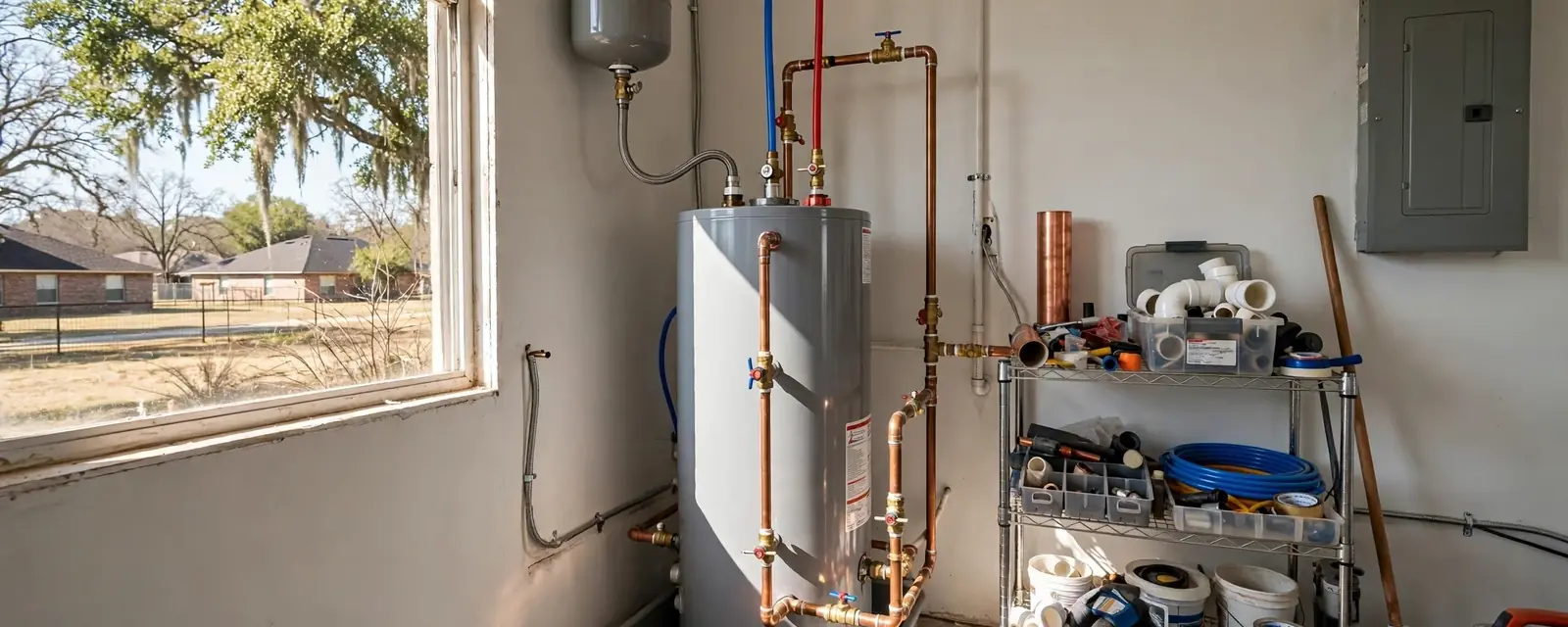
A 40 gallon gas tank is a common size for a household of two to four people. It fits many existing closets and basements and replaces most older units in the same footprint.
The size is only part of the job. Venting, gas connections, a drain pan and relief piping decide whether the installation is safe.
Is 40 gallons the right size
Tank size follows peak demand. A household with two showers in the morning and a dishwasher may be comfortable on 40 gallons, while a house with a soaking tub and teenagers may want 50.
Gas heaters recover quickly, so a 40 gallon gas unit often feels larger than a 40 gallon electric one.
What the install includes
A proper install covers more than the tank.
| Item | Why it matters |
|---|---|
| Vent connection | Carries combustion gases out, needs correct slope and support |
| Gas connection and shutoff | Safe supply, with a drip leg and a tested joint |
| Drain pan and relief pipe | Controls leaks and safe discharge |
| Expansion tank where needed | Handles pressure rise in closed systems |
Venting and combustion air
Gas tanks pull air for burning and push gases up a flue. A heater in a tight closet needs combustion air, and a vent that is blocked or sloped wrongly can spill gases into the house.
A carbon monoxide alarm near the heater is a smart addition. If you want more on the process, our water heater installation page covers what we check.
What the first hour of hot water means
Manufacturers rate a tank by its first hour rating, the amount of hot water it delivers in an hour starting full. That figure combines the tank size and the burner's recovery rate. A 40 gallon gas tank often has a higher first hour rating than a 40 gallon electric tank.
Compare your own peak hour, such as two showers, a dishwasher and a load of laundry, to that rating.
Common mistakes on installs
Reusing old flexible gas connectors, skipping the drain pan, running a vent with too little slope and ignoring combustion air are the errors a plumber sees most. Each is easy to avoid and costly to fix later.
Ask the installer how each of these will be handled.
Maintenance after installation
Flush the tank once a year and test the relief valve by lifting its lever briefly. Check the anode rod every few years. Keep the area clear and watch the flame color, which should be steady and blue.
A neglected tank can fail early, so a little yearly attention goes a long way.
What to ask the installer
Ask which parts are new, such as the gas connector, shutoff valve, relief valve and vent pieces. Ask whether the work is under permit and who schedules the inspection.
Ask what happens to the old tank and whether the area will be cleaned. A clear answer on each is a good sign.
Planning the replacement day
Clear the area around the heater, tell the installer about stairs or tight spots and plan for the water to be off for part of the day. Have a plan for showers and laundry.
A plumber who walks the route from the truck to the heater in advance avoids surprises on the day.
What your installer should leave behind
You should end up with a working heater, a clear shutoff point for gas and water, the manufacturer's paperwork and the permit and inspection details if they apply.
Ask the plumber to show you the relief valve, the shutoff valves and the drain, and to explain what to do if the pilot goes out.
Energy use and efficiency notes
Newer tanks have better insulation and burners than older ones, so a modern 40 gallon heater often uses less gas than the old one it replaces. Lowering the thermostat to a safe setting and insulating hot lines also trims use.
Ask the installer about the efficiency rating and whether the venting needs to change for a higher efficiency model.
Local notes for West Milford
Permits and fuel have local details.
Plumbing subcode
The township Department of Building Safety handles plumbing permits through its plumbing subcode, and New Jersey adopts the National Standard Plumbing Code for installation rules.
Propane inspections
The township plumbing inspector inspects LP gas tanks, and many local properties use propane.
Sediment
Well water can leave sediment in a tank, so plan to flush it.
Permit rules
Permit rules vary, so ask the West Milford building department about your job.
The same approach applies in Ringwood and Kinnelon, where borough offices handle permits.
If your heater just failed
If you are replacing a failed tank today, see emergency water heater replacement for how we handle same-day swaps.
Gas water heater installation questions
How long does a 40 gallon gas install take?
A like-for-like swap often takes part of a day.
Do I need a permit?
Plumbing work is covered by the plumbing subcode, so ask the township.
Can I switch from electric to gas?
Only if gas is available and a vent route works.
How often should I flush it?
Yearly is a good habit, more often with sediment.
Should the gas line be tested after install?
Yes. The plumber checks every joint for leaks before the heater is put in service.
Can I install a gas heater myself?
In New Jersey plumbing work must be done by a licensed professional, so hire one.
What standard applies to venting?
Venting follows the manufacturer's instructions and the National Standard Plumbing Code that New Jersey adopts in N.J.A.C. 5:23-3.15.