
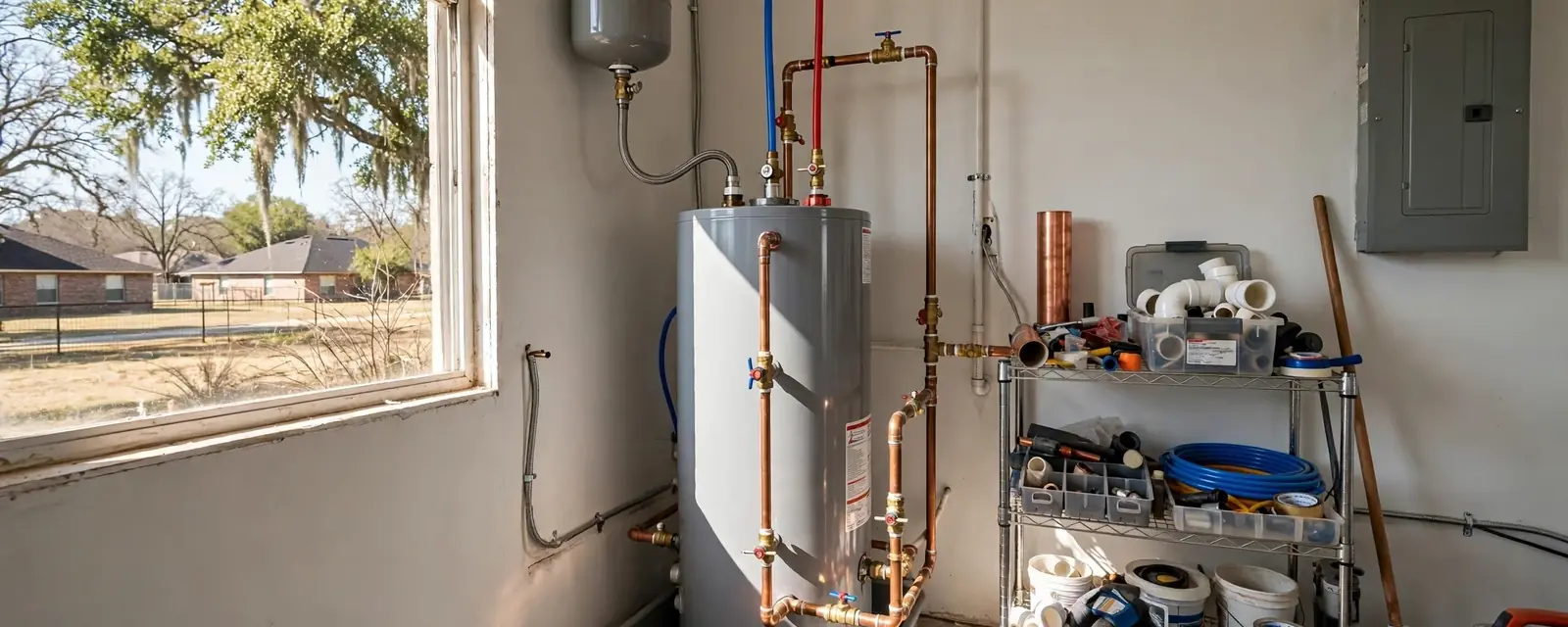
A good installation starts before the heater arrives. The plumber looks at where it will sit, how the vent or flue runs, where the drain pan and relief piping will go and whether the gas line or circuit is ready.
This page is for planned work such as upgrades, fuel changes and new locations. If your heater has already failed and you need hot water today, see emergency water heater replacement.
The township's Department of Building Safety handles plumbing permits through its plumbing subcode, and an installation done under permit is inspected, which protects you when the house is sold.
Sizing the tank to the household
Tank size is about the first hour of demand. A couple needs much less than a family of five with teenagers, and a house with a soaking tub needs more capacity than one with showers only.
An undersized tank runs out and recovers slowly, while an oversized one wastes energy keeping extra water hot. The plumber helps you choose after asking how the household actually uses hot water.
Fuel choices compared
Each fuel has trade-offs.
| Fuel | Strength | Consider |
|---|---|---|
| Natural gas | Fast recovery where gas is available | Needs a proper vent and gas line |
| Propane | Option where there is no natural gas | Tank and regulator location, and gas safety rules |
| Electric | Simple venting, lower install complexity | Slower recovery and breaker needs |
| Heat pump | High efficiency | Needs space, air flow and a drain |
Propane and permits
Many properties in the township use propane. The township's plumbing inspector inspects LP gas tanks, so a gas appliance on propane belongs under permit like any other. Ask the plumber to confirm the gas piping and the tank connection are included in the scope.
Venting, pans and relief piping
A heater in a basement or closet needs a drain pan under it and a pipe that carries the relief valve discharge to a safe place. Gas models need a vent with proper slope, support and clearance.
These details are where installs go wrong, and the plumber checks each of them before filling the tank. If you are considering a tankless unit instead, see tankless water heater installation for the extra requirements.
Safety devices that belong on every install
A temperature and pressure relief valve with a proper discharge pipe, a shutoff valve on the cold supply, an expansion tank where the system is closed and a drain pan in finished spaces are the standard set. Gas appliances also call for a carbon monoxide alarm nearby.
These items are cheap compared with the damage they prevent, and the plumber checks that each one is present and working before leaving.
What to do before installation day
Clear a path to the heater, move stored items away from the area and make sure the main shutoff is reachable. Keep pets and children out of the work zone.
If you smell gas at any point, leave the house and call your gas utility from outside.
What affects the price of an installation
Installation quotes are built from the equipment and the site.
Heater type and size
The unit itself varies widely.
Venting and fuel connections
New vents and gas lines add work.
Electrical needs
An electric or heat pump model may need a new circuit.
Code items
Pans, expansion tanks and relief piping are part of a proper install.
Permit and inspection
The filing and inspection visit are part of a permitted job.
We give a clear price before work starts. The real number depends on your site, so call to arrange a look.
Water heater installation questions
Can you move my water heater to a new spot?
Often yes, but the new spot needs a vent path, a drain and the fuel connection. The plumber checks before quoting.
What size heater do I need?
It depends on the household and the fixtures. The plumber asks about showers, tubs and laundry habits.
Do you install electric and gas heaters?
Yes, plus propane-fired units and heat pump models where the space allows.
Will you remove the old tank?
Yes. The old unit is drained, disconnected and hauled away.
What warranty will I have?
The heater has a manufacturer warranty and the work is covered by our workmanship terms, which the plumber explains before the job starts.
What standard does an installation have to meet?
New Jersey's plumbing subcode adopts the National Standard Plumbing Code in N.J.A.C. 5:23-3.15, and the manufacturer's instructions cover venting, clearances and relief piping.