
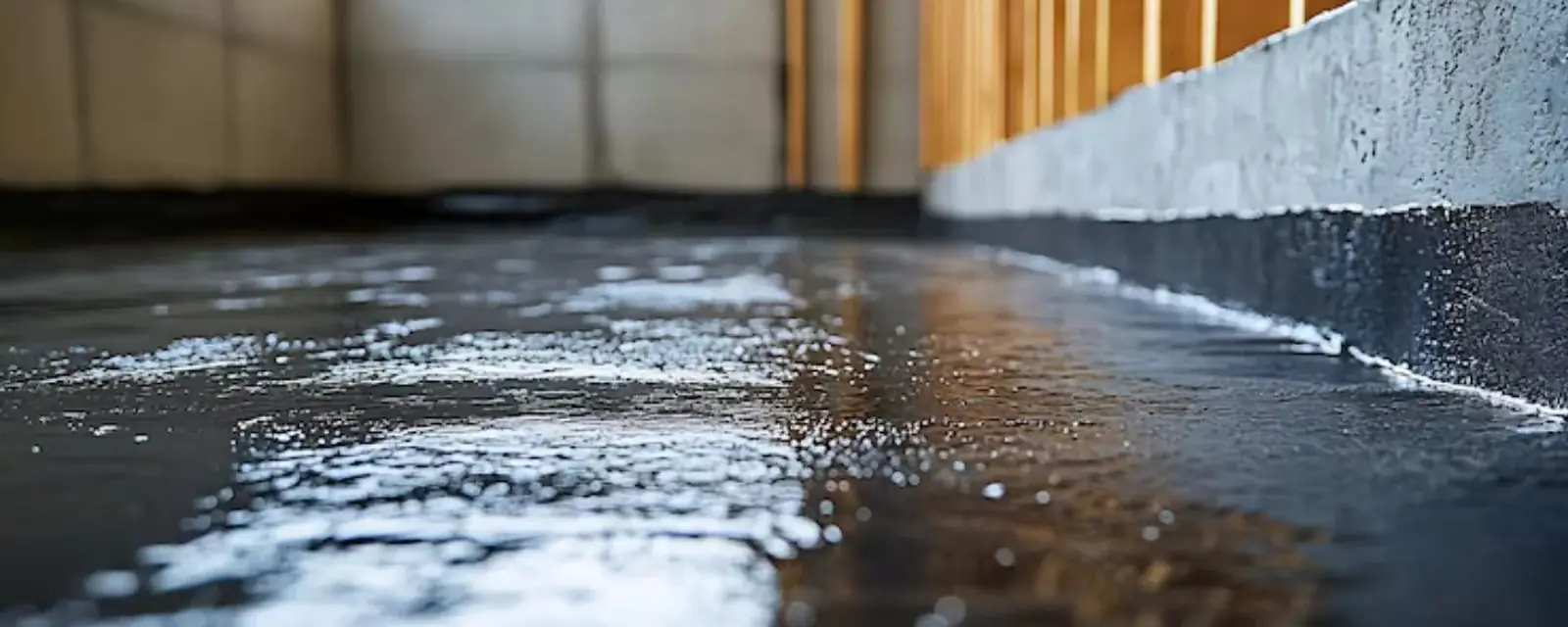
Liquid rubber coatings are sprayed or rolled on as a flexible membrane. They are popular because they are fast, joint-free and good at bridging small cracks.
Whether they stop a wet basement depends on where the water comes from. A coating deals with dampness through the wall. It does not remove the water that is pressing against the foundation.
What a liquid membrane does well
A cured membrane stretches with small movements and seals pores in concrete. It works well on dry, clean surfaces where the problem is seepage, small cracks or a moist wall rather than flowing water.
On the outside of a foundation, a membrane applied before backfill is part of a proper waterproofing system. Inside, its role is more limited.
Where interior coatings fall short
Water pushing through a wall under pressure can lift a coating off the surface, creating blisters. Active leaks, wet concrete and efflorescence all prevent a good bond.
If the water comes from a high water table or poor grading, the coating treats the symptom and leaves the cause.
Match the problem to the fix
Different moisture problems need different solutions.
| Problem | Better fit | Notes |
|---|---|---|
| Damp wall, no flowing water | Coating or masonry sealer | Surface must be clean and dry |
| Active crack leak | Crack injection and drainage | A coating alone may fail |
| Water at the floor and wall joint | Interior drain tile and sump | Moves water to a pump |
| Rain runoff against foundation | Grading, gutters, downspouts | Often the cheapest first fix |
Fix the water source first
Check gutters, downspouts and grading. Water should run away from the house, not toward it. Extending downspouts several feet and sloping soil away from the foundation reduces what the basement faces.
If water still enters, a drain and pump system collects it. See our sump pump repair page for how that side works.
Ask the contractor these questions
What will you do about the source of the water? How is the surface prepared? What is the warranty and what voids it? Will you drain and pump if needed?
A contractor who proposes coating over an actively leaking wall without addressing drainage is selling a short-term cover-up.
Surface preparation decides success
A membrane needs a clean, sound surface. Loose paint, efflorescence and old sealers must come off. Cracks are patched, and holes are filled. The wall should be dry to the manufacturer's standard.
Skipping this work is the most common reason coatings fail.
Signs the problem is not the wall
Water at the floor joint after rain, damp patches that follow the downspout locations and wet spots that grow in spring all point to outside water. A leaking pipe shows up regardless of weather.
Matching the pattern to the cause saves money.
A simple moisture test you can do
Tape a square of plastic sheet tightly to a bare wall and leave it for a day or two. Moisture under the plastic means water is coming through the wall. Moisture on the outside of the plastic means it is condensation from room air.
That tells you whether a coating or a dehumidifier is the better first step.
Cost thinking for a wet basement
The cheapest fix is often outside, such as downspouts and grading. Interior drainage with a sump costs more but handles real water. A coating costs little by comparison but only treats a damp wall.
Try the cheaper fixes first, and measure the result across a few storms.
Humidity versus leaks
A basement can feel damp without any water entering. Warm humid air meeting cool concrete condenses on the wall, and that moisture can look like a leak.
A dehumidifier and good air circulation often fix condensation, while a coating would do nothing for it.
Ventilation and dehumidifying
Even a dry basement can feel damp in summer. Run a dehumidifier, keep vents clear and avoid drying laundry indoors. These steps cost little and protect any coating you apply.
Measure the humidity with an inexpensive meter and aim to keep it moderate through the year.
Local notes for West Milford
Precipitation and terrain matter here.
Rainfall
The township averages about 51 inches of precipitation a year, which keeps soil wet and foundations under pressure.
Highlands terrain
The township sits in the Highlands, where slopes and rock send runoff toward lower houses.
Hurricane Irene
Floodwater in August 2011 reached homes including a Madelyn Avenue house with 19 inches of water reported by the West Milford Messenger.
Permits
Ask the West Milford building department whether drainage or plumbing work needs a permit.
Basement moisture questions come up in Bloomingdale and Ringwood as well.
When plumbing is part of the answer
A sump, an ejector pit or a failed pipe may be adding water. A leak under the slab or in a wall can mimic seepage, which is where our leak detection work comes in.
Basement waterproofing questions
Will liquid rubber stop all basement water?
Not on its own. It helps with seepage, but active pressure needs drainage.
Can I apply it myself?
Surface prep is critical. Many homeowners do, but results depend on a clean, dry wall.
How long does it last?
It depends on the product and the conditions. Ask for the warranty terms.
Do I need a sump pump?
If water collects at the floor, a sump pump removes it.
Does it trap moisture?
A membrane on a wall that keeps getting wet from outside can trap it. Address the source.
Can I paint over a damp wall?
Paint will not hold on a wet wall. Fix the moisture source first.
Is a wall coating regulated by code?
Coatings follow the manufacturer's data sheet, while any drain or pump added to the system follows the National Standard Plumbing Code that New Jersey adopts in N.J.A.C. 5:23-3.15.