
A slow drain on a house with municipal sewer is almost always a clog. On a septic system, the same symptom may point to the tank, the outlet or the field.
A few observations help you decide who to call, and they cost nothing.
Start with the pattern
If one fixture is slow, the clog is probably in its own trap or branch. If every fixture is slow or gurgling, the problem is in the main line or beyond it.
On septic, add the yard to your check. Wet ground, a sewage smell or unusually green grass over the tank or field are signs the system is struggling.
Clues and what they suggest
A rough guide.
| What you see | Likely location | Who to call |
|---|---|---|
| One sink slow | Local trap or branch | Plumber, see drain cleaning |
| All drains slow | Main line or tank | Plumber first, then septic professional |
| Wet spot over tank or field | Septic system | Septic professional |
| Gurgling and smell | Main line or vent | Plumber |
What not to do
Do not pour chemical openers into a slow drain on a septic system. They harm the bacteria that help break down waste and can damage older pipe. Avoid flushing wipes, and keep grease out.
Do not keep running water to see if it clears. On a full tank, extra water pushes more effluent toward the field.
What the plumber checks
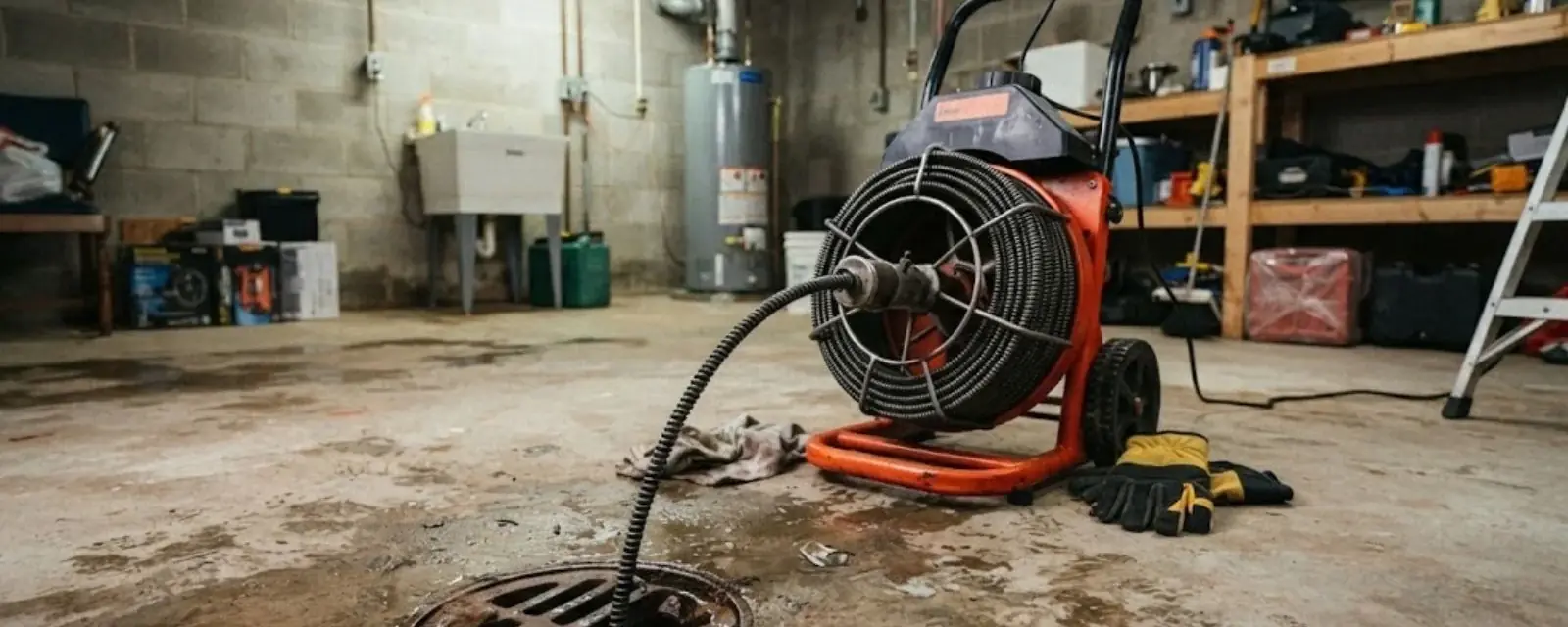
The plumber finds the cleanout, runs a cable through the house line and checks flow. If the line is clear and water still drains slowly, the problem is likely at the tank, the outlet baffle or the field.
A camera look through sewer camera inspection shows the house line and any damage between the house and the tank.
Pumping is not a repair
A full tank needs pumping, and pumping on a regular schedule prevents many problems. It does not fix a damaged field or a collapsed line. If a tank fills again quickly after pumping, something else is wrong.
That is a question for a septic professional.
Keeping the system healthy
Spread laundry over the week, fix leaking toilets and faucets, use a lint filter on the washer and keep heavy vehicles off the tank and field. Plant only grass over the system, since roots seek moisture.
Keep a record of pumping dates and any repairs, which helps the next professional and a buyer.
Questions for a septic professional
Ask when the tank was last pumped, what the outlet baffle looks like and whether the field is draining. Ask for a written record of what was found.
A professional who explains the findings in plain language is easy to trust.
Records worth finding
Look for the septic permit, a tank pumping receipt, a sketch of the tank and field and any repair paperwork. The township Health Department may have records for your address.
These documents tell a professional what system you have and help avoid digging in the wrong place.
When to call which professional
For a clog in the house, call a plumber. For a full tank, a soggy field or a sewage smell in the yard, call a septic professional. For a mystery, start with the plumber, who can rule out the house line.
Both professionals work from the same information, so share what you have seen.
A weekly habit that helps
Once a week, run hot water for a minute down the kitchen drain after washing dishes and keep a strainer in the sink. These habits keep grease and food bits from building up in a branch line.
If you rent out a lake cottage, give guests a short list of what not to flush, since seasonal use brings surprises.
Vent problems that mimic clogs
A blocked plumbing vent on the roof can make drains gurgle and run slowly even when the pipe is clear. Leaves, snow and nests are common causes.
If drains slow down during wind or after a storm, mention it, because a plumber checks the vent as well as the drain.
Local notes for West Milford
Septic is central to local plumbing.
Soil limits
The township groundwater study found about 72 percent of soils have severe septic limitations and only about 2 percent are suitable for conventional septic.
Health Department
The township Health Department at 1480 Union Valley Rd handles septic questions.
Kinnelon schedule
The Kinnelon Board of Health recommends pumping every three years, every two as a system ages, and says most Kinnelon residents have septic.
No grinders
Kinnelon also advises against adding a garbage grinder to an existing system.
Septic questions are common in Kinnelon and parts of Ringwood, where lake-colony homes were converted from seasonal use.
If the main is backing up
If water is coming into the house, stop using water and call. Our sewer line cleaning team handles the house line and tells you when the tank is the issue.
Slow drain and septic questions
How do I know if my tank is full?
Slow drains throughout the house, gurgling and wet ground are signs. A pump-out record helps.
Can I use enzyme additives?
They are not a substitute for pumping. Ask a septic professional.
Does a slow drain mean I need new pipe?
Not usually. Most are clogs.
Who pumps tanks?
A septic service company. We advise on the house line.
Is a camera useful on septic?
It shows the house line. The tank needs its own inspection.
Can a roof vent cause slow drains?
Yes. A blocked vent stops air from entering the pipe, which slows the flow and causes gurgling.
Who sets the rules for septic work?
Septic systems are regulated through health and environmental rules, and the township Health Department handles local questions. The house plumbing follows the National Standard Plumbing Code in N.J.A.C. 5:23-3.15.