
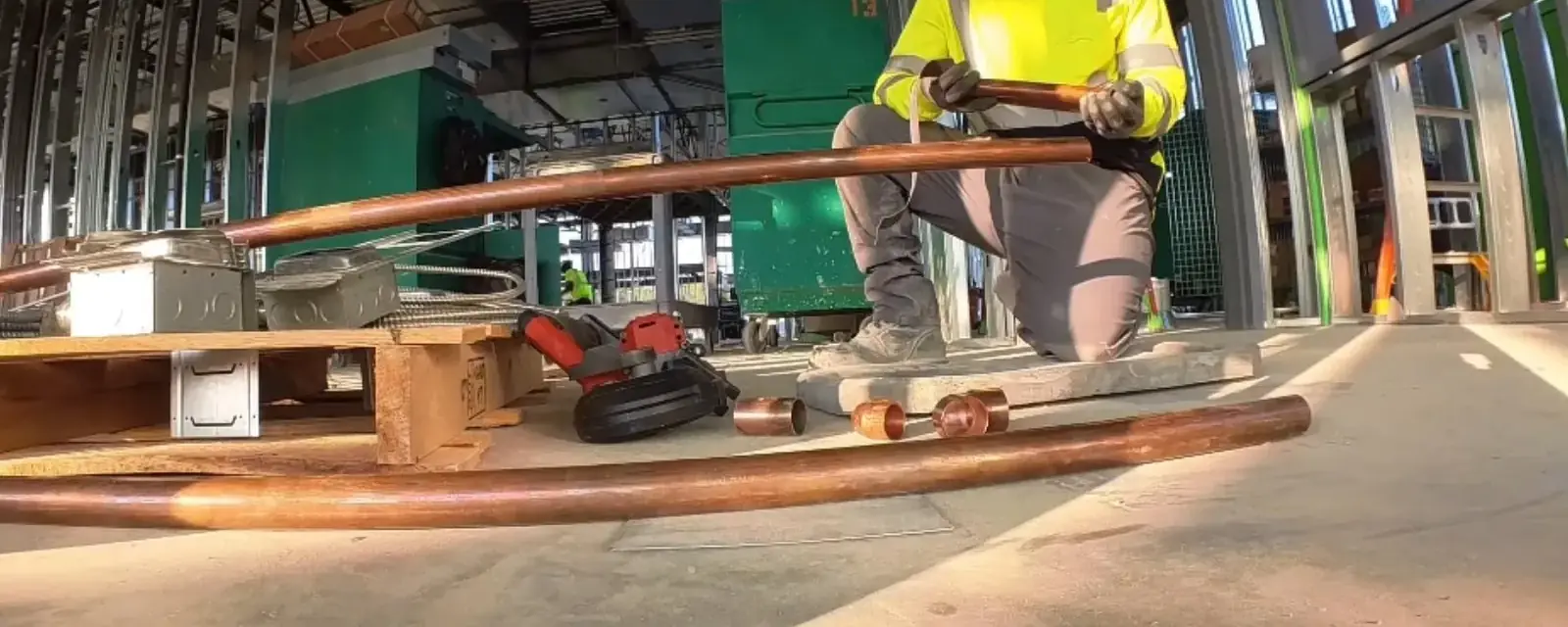
Installation work covers new fixtures, relocated lines and additions. The plumber measures, plans the supply and drain routes and then sets rough-in plumbing before walls close, so everything lines up with the finished fixtures.
Unlike an emergency visit, a planned install gives you time to choose fixtures and coordinate with other trades.
If a failure is driving the project, such as a leaking line or a failed fixture, start with the matching emergency service and then plan the installation.
What we install
Typical projects include sinks, toilets, tubs and showers, laundry hookups, water softeners and filters, outdoor spigots and utility sinks. We also run new supply and drain lines for additions and basement bathrooms.
Basement bathrooms in West Milford often face a real challenge, which is getting the drain below the slab or lifting waste up to the main line with an ejector pump.
Typical installation steps
The order matters.
| Stage | What happens |
|---|---|
| Plan | Layout, fixtures and code check |
| Rough-in | Supply and drain lines set before walls close |
| Inspection | Township plumbing inspection of the rough-in |
| Finish | Fixtures set, connected and tested |
Permits and the township
Plumbing work in West Milford goes through the Department of Building Safety, whose permit application includes a plumbing subcode section. New Jersey requires that plumbing be done by a master plumber or authorized contractor.
Permit rules vary, so ask the West Milford building department about your project. Our plumbers handle the paperwork on jobs we do.
Well and septic homes have extra steps
If the home is on a well, check that the pressure tank and pump can supply a new bathroom. If on septic, a new fixture adds load to the system, so ask about capacity. The plumber explains both before any lines are run, and for sump work see sump pump repair.
Planning your project timeline
Order fixtures early, because a missing faucet or tub can hold up the finish stage by weeks. Tell the plumber about tile or cabinet dates so the rough-in inspection happens before walls close.
A realistic schedule has the plumber on site at rough-in, again at finish and available for the inspection in between.
Basement bathrooms and ejector pumps
When the planned fixture sits below the level of the main drain, gravity cannot carry the waste out. A sealed pit with an ejector pump lifts wastewater up to the drain line, and it needs its own vent, a check valve and a cover that holds gas in.
Unlike a sump pump, which moves groundwater, an ejector handles sewage. The two should never share a pit, and the plumber sizes the pump for the fixtures it serves.
Choosing fixtures that last
The cheapest fixture is rarely the least expensive over ten years. Look at the valve or cartridge inside a faucet, the flush mechanism of a toilet and the warranty on any fixture you plan to install.
Bring the model numbers to the first visit and the plumber checks that the rough-in dimensions, supply sizes and drain openings match before the fixture is ordered or opened.
What to do before the plumber arrives
Clear access to the work area, make sure the water shutoffs are reachable and keep pets and children away from open walls. Have your fixture model numbers handy.
If you hit a gas smell or a leak while preparing, stop and call.
What affects the price of an installation
Installation quotes depend on the project.
Number and type of fixtures
A single sink is a smaller job than a bathroom.
Pipe runs and access
Long runs and finished walls add labor.
Fixtures supplied
Customer-supplied or plumber-supplied fixtures change the quote.
Permits and inspection
Required for most new work.
Coordination
Working around other trades affects scheduling.
We give a clear price before work starts. The real number takes a conversation, so call to arrange a visit.
Plumbing installation questions
Do you install fixtures I buy myself?
Yes, as long as they are in good condition and the parts are complete.
Can you add a bathroom in my basement?
Often yes, with attention to the drain depth and whether an ejector pump is needed.
Do I need a permit for a new sink?
Rules vary, so ask the West Milford building department. We handle the paperwork on our jobs.
Will you coordinate with my contractor?
Yes. The plumber schedules rough-in and finish around other trades.
How soon can the work start?
It depends on the project and the schedule. Call and we will plan it.
Which standards apply to new plumbing?
New work follows the National Standard Plumbing Code as adopted in N.J.A.C. 5:23-3.15, any electrical items follow the National Electrical Code (NEC), and the township inspects the rough-in.