
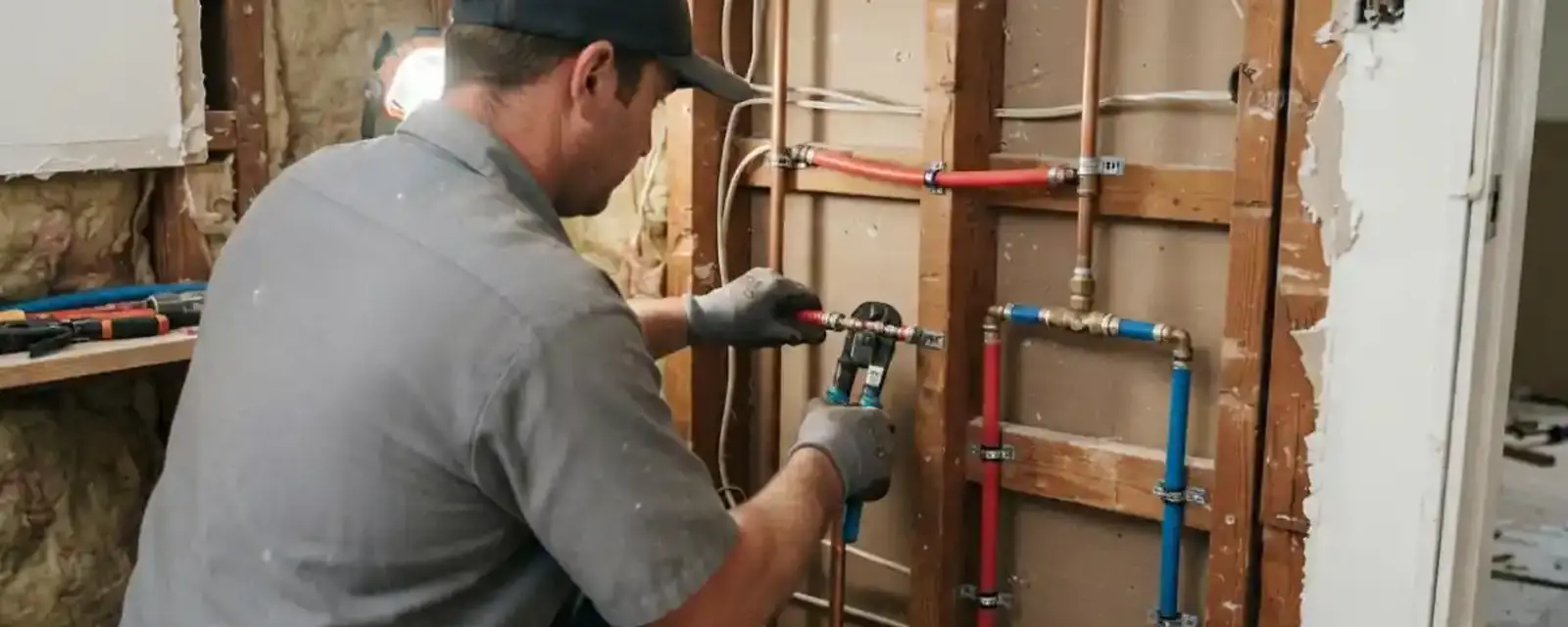
Repiping replaces the supply lines that carry water to your fixtures. It is a bigger job than a repair, and it is worth considering when leaks keep appearing in different spots, when water runs brown or when pressure is poor despite a good supply.
A burst or a leak that has to be stopped today is handled first through emergency burst pipe repair, and repiping is the next conversation.
Many of the older houses in the township were built before today's materials, so a plumber looks at the pipe you actually have rather than assuming.
When repiping makes sense
One leak in one spot is a repair. Several leaks in a year, pipes that are visibly corroded or fittings that crumble are signs the system is wearing out as a whole.
Galvanized steel is the classic case. It corrodes from the inside, narrows over the years and reduces flow, and it can discolor water.
Pipe materials compared
Both PEX and copper are good choices when installed properly.
| Material | Strength | Consider |
|---|---|---|
| PEX | Flexible, fewer fittings, quicker to install | Not for sunlight, protect from heat sources |
| Copper | Long track record, rigid | Water chemistry matters, costs more to install |
| CPVC | Rigid plastic for hot and cold | Can become brittle |
| Galvanized | Older systems | Corrodes and narrows with age |
Water chemistry matters
The township's groundwater study notes the Highlands bedrock aquifers and a range of well conditions. Acidic or aggressive water can eat copper from the inside, and mineral-rich water can scale pipe.
If you rely on a private well, a water test shows what the pipe will face. The plumber matches material to the water, and leak detection may help you decide between a partial and a full repipe.
How the work is done
A repipe usually opens small access holes in drywall, runs new lines to each fixture, and then patches. Water is off for part of the day, and the plumber plans stages so you can keep a bathroom working. A permit and inspection are part of the project.
Planning around a lived-in house
Most repipes happen with the family at home, so the plumber plans the sequence to keep at least one bathroom and the kitchen working through the day. Furniture in the way of access points is moved or covered, and the plan names each wall that will be opened.
Ask about the drywall repair before the work starts. Patching is a separate trade, and knowing who does it and when keeps the project from dragging.
Quick checks you can make today
Run a cold tap in the kitchen and a bathroom at the same time and note whether the flow drops sharply. Fill a clear glass from the hot tap and look for rust-colored or cloudy water. Look at exposed pipe for green crust, white mineral stains or small pinholes.
None of these proves a repipe is needed, but a few of them together give the plumber a place to start.
What affects a repiping price
Repipes are priced by the home.
Size of the house
More bathrooms and fixtures mean more pipe.
Access
Open basements and crawl spaces are easier than finished ceilings.
Pipe material
PEX and copper have different material and labor costs.
Drywall repair
Patching holes is a separate scope.
Permit and inspection
Included in a proper job.
Insurance rarely pays for repiping itself, but may help with damage from a sudden failure. We give a clear price before work starts, and the real number takes a site visit.
Repiping questions
How long does a repipe take?
It varies with the house. The plumber gives you a schedule after the walk-through.
Will I be without water?
For part of the work. The plumber plans stages to keep disruption small.
Is PEX safe for drinking water?
Yes, PEX approved for potable water is widely used.
Do I have to repipe the whole house?
Not always. A partial repipe of the worst runs can be enough.
Will walls have to be opened?
Some access holes are usually needed, and the plumber explains where.
What code governs a repipe?
A repipe is permitted work under New Jersey's plumbing subcode, which adopts the National Standard Plumbing Code in N.J.A.C. 5:23-3.15, and it is inspected before walls are closed.