
Homeowners with older houses often hear two opposite things about hydro jetting. One plumber says it is the best way to clean a coated line, and another says it will destroy an old pipe.
Both can be right, because the answer depends on the pipe. The deciding step is a camera look before anything is jetted.
What jetting does to a pipe wall
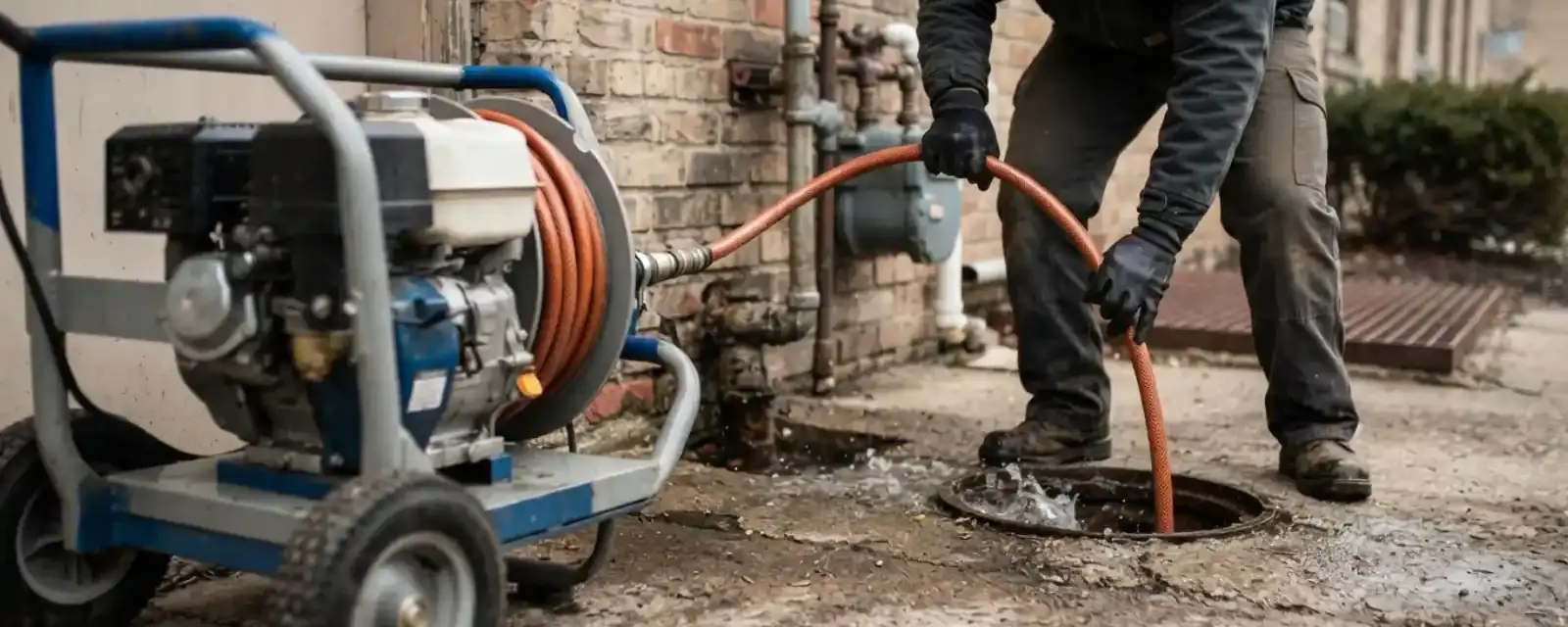
A jetting nozzle sends water backward through small ports, which pulls the hose forward and scours the pipe wall. The pressure is adjustable, and for household lines it is set far below what would cut a sound pipe.
The risk is not the pressure itself. It is a pipe that is already cracked, thin or separated, where the water can enlarge the damage.
How different old pipes respond
Cast iron is tough but scales and tuberculates, and jetting removes the rough layers and restores flow. Clay pipe is often jetted successfully but has joints that may be offset or root-filled. Galvanized steel supply pipe is a different matter, since jetting is for drains, not supply lines.
Orangeburg, a tar-and-fiber pipe used in some mid-century construction, is soft and often deformed, so jetting is rarely a good idea there.
Old pipe types and jetting
A general guide, always confirmed by a camera.
| Pipe type | Jetting outlook | Notes |
|---|---|---|
| Cast iron | Often good | Removes scale, check for thin walls |
| Clay | Often good | Watch for offsets and root-filled joints |
| Orangeburg | Usually avoided | Soft, often deformed |
| PVC or ABS | Good | Sound plastic handles it well |
Why a camera comes first
A sewer camera inspection shows the pipe material, wall condition and any defects. If the camera finds a hole or a collapse, jetting stops and repair comes first.
If the footage looks sound, the plumber picks a nozzle and a pressure suited to the pipe and works up gradually.
Signs jetting should wait
A pipe with a visible crack, a joint that has separated, a section that sags or pipe that has been repaired with patches should be reviewed before any jetting. Water pressure finds weak points.
A plumber who explains this before starting is protecting both you and the pipe.
How jetting is done safely
The plumber starts with a low pressure setting and a gentle nozzle, then works along the line while watching the pressure gauge. The hose is fed steadily so the nozzle does not sit in one place.
A final camera pass shows the result and lets you see the pipe wall after cleaning.
Maintenance after jetting
Once the pipe is clean, keep grease and wipes out of it. Consider a camera check a year later if the line had repeated problems, and keep the cleanout accessible.
A clean line is easier to keep clean than a coated one is to clear.
What to expect on the visit
The plumber finds the cleanout, runs the camera if the pipe is unknown, then chooses the tool. You should see the footage and hear what was found.
After cleaning, ask for a final look so you can compare the pipe wall before and after.
Signs an old line is ready for repair instead
A line that has been cleaned several times and clogs again, a camera that shows a crack or a collapse and wet ground over the pipe all suggest repair is next.
A plumber should explain why jetting stops being the answer and what the next step costs, so you can plan.
Why grease is the real enemy
Warm grease is liquid and flows down the drain, then cools and sticks to the pipe wall, collecting hair and paper. Over time it narrows the pipe until it blocks. Jetting scours it away, and good habits keep it from returning.
Wipe greasy pans with a paper towel before washing and put the towel in the trash.
Jetting versus chemical cleaners
Chemical drain cleaners sit in the pipe and can harm old metal and plastic joints. Jetting uses plain water and moves debris out of the line.
For a repeat clog in an old pipe, mechanical cleaning is gentler than another round of chemicals.
Local notes for West Milford
Local conditions affect old lines.
Older housing stock
West Milford was incorporated in 1834 and has many older homes and converted seasonal cottages, so older drain materials are common.
Wet ground
About 51 inches of precipitation a year keeps soil wet, which draws roots toward pipe joints.
Septic limits
About 72 percent of township soils have severe septic limitations, so jetting should target the house line and not push debris toward a tank or field.
Mark-out
Any excavation that follows calls for NJ One Call at 811 first.
The same questions come up in Ringwood and Kinnelon, where older cottages and septic systems are common.
If a line is backing up now
A backed-up line is an emergency, and our emergency hydro jetting team starts with a safe first clear and a camera look.
Hydro jetting and old pipe questions
Will jetting break my old pipe?
Not if the pipe is sound and the pressure is set correctly. A camera look first protects against surprises.
How often is jetting needed?
Only when symptoms like repeat clogs call for it.
Does jetting damage septic systems?
It should not be aimed at a tank or field. Use it on the house line.
Can jetting remove roots?
Fine roots yes. Thick roots need cutting and repair.
What if the camera finds a crack?
Repair comes first, and jetting waits.
Are chemical cleaners safer than jetting?
Not for old pipes. Standing chemicals can damage fittings and make later repairs hazardous.
Is there a standard for jetting pressure?
Pressure is set by the plumber to suit the pipe, and any repair afterward follows the National Standard Plumbing Code that New Jersey adopts in N.J.A.C. 5:23-3.15.