
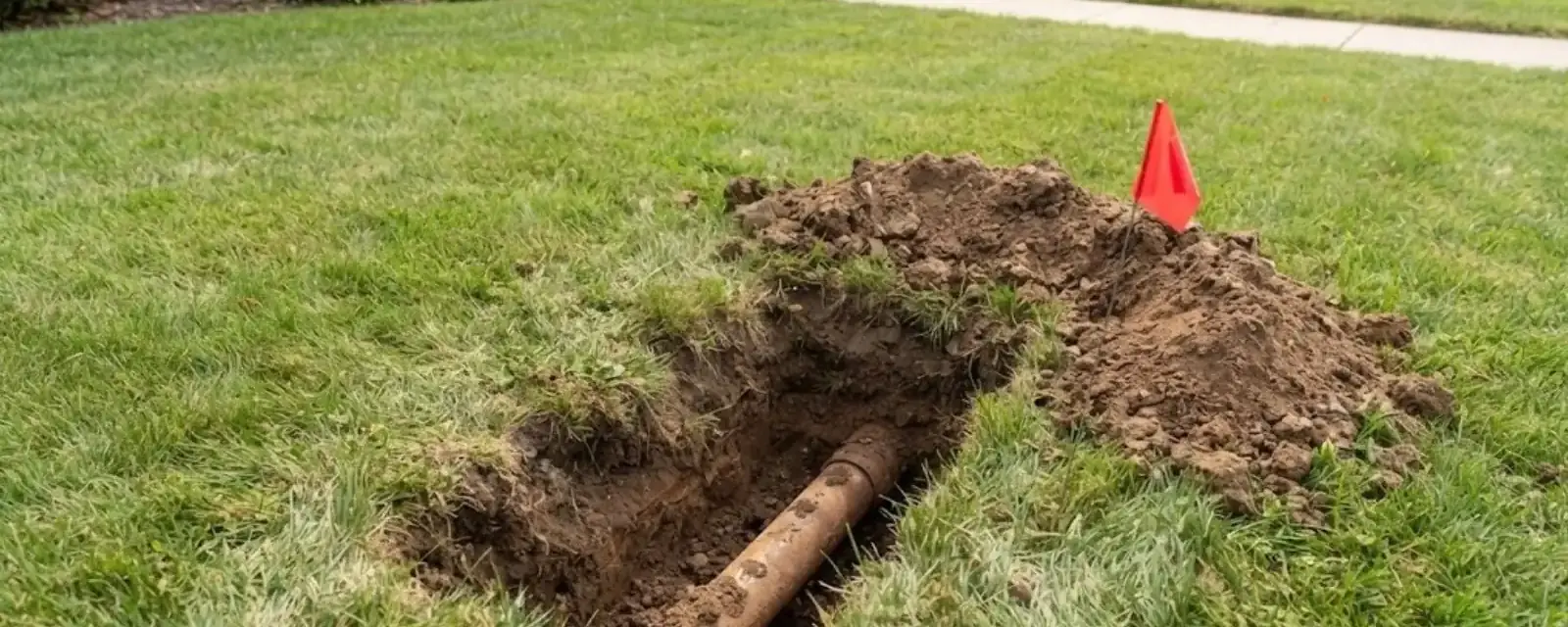
Trenchless sewer lining sounds like magic. A resin-soaked tube goes into the old pipe, is cured in place and forms a new pipe inside the old one, all without digging up the whole yard.
It is a real repair with real limits. Whether it fits your West Milford property depends on what a camera finds and what lies above the pipe, such as mature trees, a driveway or a septic component.
How lining works step by step
The line is cleaned first, usually by cable or jetting, so the liner can bond to a clear wall. A camera then confirms the pipe is round enough and free of collapse. The liner is pulled in, inflated against the old pipe and cured with hot water, steam or light.
Afterward, a final camera pass checks that the new pipe is smooth and the connections are open. The result is a sealed pipe with a slightly smaller diameter.
When lining is a good fit
Lining suits pipes that are structurally in place but leaking at joints, cracked or rough from root intrusion. It is attractive when the line runs under a driveway, patio or well-established trees, since the access pits are small.
It is not suited to a pipe that has collapsed, been crushed or sagged into a belly that holds water, because a liner follows the shape of the pipe it goes into.
Lining versus digging
Each approach has strengths.
| Factor | Trenchless lining | Open trench repair |
|---|---|---|
| Yard disruption | Small access holes | A trench along the pipe |
| Best for | Cracks, leaking joints, root entry | Collapsed or misaligned pipe |
| Fixes a sag | No | Yes, because the pipe is re-laid at slope |
| Needs a clean pipe first | Yes | Not always |
Questions to ask before you approve lining
Ask for the camera footage that supports the recommendation and the distance to each defect. Ask what diameter the liner will leave, how the connections to side lines are reopened and how the finished pipe will be inspected.
Ask also who warrants the work and for how long, in writing. A contractor who is confident in the method will explain these answers without hurry.
Roots, offsets and bellies
Roots entering a joint are a good lining candidate, because the roots are cut and the joint is sealed. An offset joint where one pipe end sits lower than the other can leave a lip that catches debris, and a liner may smooth it but will not remove it.
A belly, where the pipe sags and holds water, repeats trouble after lining because the slope is still wrong. In that case the honest answer is to dig and re-lay the section.
Planning around the property
Access pits are small, but they still need room. The plumber looks at where the cleanout is, how deep the pipe runs and what sits above it. A pit in a lawn is easy to restore, while one in a paved driveway needs patching.
On wooded Highlands lots, tree roots, rock and tight space around a septic tank can limit machinery. A walk of the property before quoting prevents surprises.
What happens after the liner is in
After curing, the plumber reopens each side connection and runs the camera again to record the finished pipe. You should get a copy of that final footage.
Keep it with the house records. If you sell, the footage and the warranty paperwork show the buyer that the line was handled properly and what its condition was.
Cost drivers you can discuss up front
Lining quotes depend on pipe length, diameter, the number of side connections and how much cleaning is needed before the liner goes in. Access pits and restoration of whatever sits above the line also count.
Ask for the quote to separate cleaning, inspection, lining and restoration so you can compare bids on the same scope.
Local notes for West Milford
These points come from township and state sources and affect how a lining job is planned here.
Mark-out comes first
New Jersey law calls for contacting NJ One Call at 811, with at least three full business days of notice, before excavation, including the small pits a lining job needs.
Permits
Plumbing work goes through the Department of Building Safety under the plumbing subcode. Permit rules vary, so ask the West Milford building department about your job.
Septic limits
The township groundwater study found about 72 percent of soils have severe septic limitations, so keep lines and tank locations in mind before choosing a method.
Wet ground
The township averages about 51 inches of precipitation a year, and wet soil can complicate open trenches.
The nearest towns see similar questions. The plumber's notes on Ringwood and Bloomingdale cover how older lines are handled there.
The camera comes first
No responsible plumber quotes lining without footage. A sewer camera inspection reveals pipe material, diameter, defects and the distance to each one.
If the footage shows a collapse, plan on sewer line repair by excavation. If it shows only roots and rough walls, hydro jetting may buy enough time to plan.
Trenchless lining questions
How long does a liner last?
Manufacturer ratings are long, but the real life depends on installation quality and the host pipe. Ask for the warranty terms in writing.
Can a lined pipe still be cleaned?
Yes, with the right cable or jetter settings. The plumber tells you what to use.
Does lining reduce flow?
Slightly, because the diameter shrinks, but the smoother wall usually offsets it.
Does lining work for a septic house?
It can on the house line. The tank and field are a separate matter, and the township Health Department handles septic questions.
How long does a lining job take?
Cleaning, lining and curing can fit into a day for a short residential run, though complex lines take longer.
Will lining stop roots from returning?
It seals the joints roots use to enter, though roots can still try at the ends of the liner and at side connections.
Is lining covered by plumbing code?
Lining is accepted by many codes when the product is approved for the pipe, and the work still falls under New Jersey's plumbing subcode, which adopts the National Standard Plumbing Code in N.J.A.C. 5:23-3.15.